Quality training
Purposeful sessions designed to complement your existing programme and club commitments.

Ambition. Commitment. Progress.
A high-performance environment for middle-distance and endurance athletes who are serious about becoming better.
Who it is for
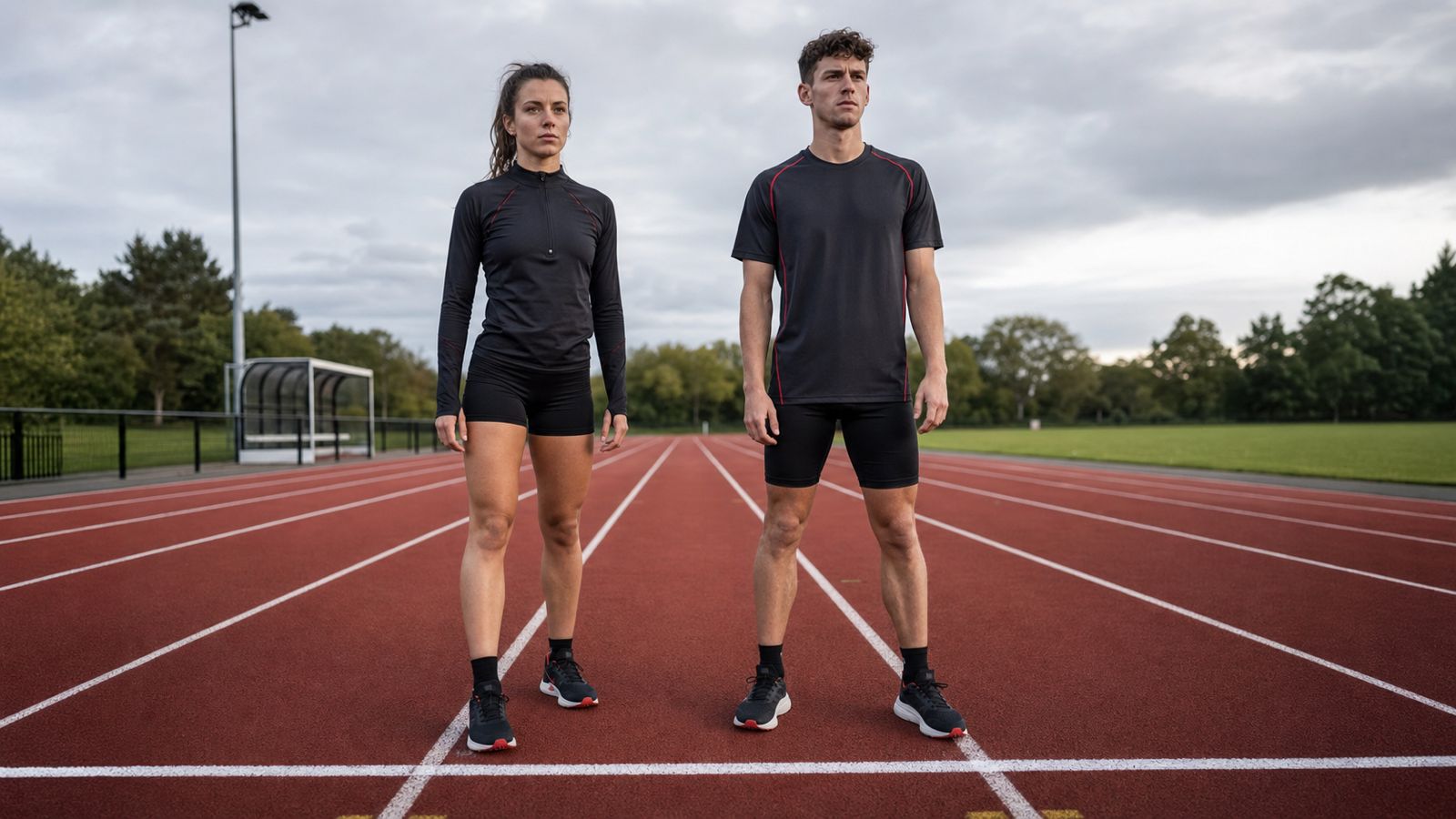
ND Performance Hub welcomes ambitious athletes from all clubs.
Train alongside like-minded runners, exchange experiences and leave every session with greater confidence, understanding and belief in your potential.
Performance standards
Purposeful sessions designed to complement your existing programme and club commitments.
Open discussion about training, racing, physiology, nutrition and performance development.
Professional, supportive and collaborative, with no club boundaries and no egos.
Athlete support services
Practical support beyond the track, helping athletes and coaches navigate the wider demands of high-performance sport.
Clear anti-doping guidance, including checking medication, supplements and current WADA requirements.
Read the clean sport guidePlan the purpose, preparation, travel, training and return home so the camp improves the athlete rather than simply exhausting them.
Plan your campWe are developing guidance to help athletes identify suitable funding opportunities and prepare stronger applications for training-camp support. This service will focus on practical planning, eligibility and presenting a clear performance case.
Guidance on choosing suitable World Athletics competitions and understanding opportunities within the points system.
Explore the race pathwayWe are developing practical resources to help athletes build a credible profile, communicate their story and approach potential sponsors professionally. The aim is to help athletes create meaningful partnerships rather than promise guaranteed sponsorship.
We are exploring partnerships and funding routes that may help athletes manage the costs of international competition. This fund may also support appropriate training camps, including altitude and environmental camps. Future guidance will cover travel planning, suitable opportunities and potential sources of financial assistance.
Signposting and practical support for recovery, injury, physical health and mental wellbeing.
Training camp preparation
A complete camp-planning guide for endurance athletes
A successful camp is not measured by how tired an athlete becomes. It is measured by whether athletes and coaches arrive prepared, absorb the right training and learning, remain healthy and return home better equipped than when they left.
Start with real life
A camp will not always fit perfectly around the race calendar or an athlete’s current fitness. Many elite athletes also balance employment, study, family and financial commitments.
Those realities are not obstacles to ignore; they are part of the plan. The Hub works with each athlete to find the best achievable camp structure, protect important commitments and set realistic expectations.
The first question
A clear purpose determines the destination, duration, training load, support required and timing of the return home.
A planned block supporting specific key races or a championship objective.
A first exposure focused on learning how the individual responds and adapts, not proving how hard they can train.
A controlled environmental camp preparing for competition in hot or humid conditions.
A productive camp built around annual leave, family time or a limited period away.
New surroundings, shared purpose and the chance for athletes and coaches to train, question, observe and learn together.
A focused period to build fitness, refine routines and learn without an immediate race target.
The camp pathway
Preparation timeline
The camp must match the athlete who arrives, not the athlete they hoped to be. Review recent training consistency, current fitness, injury or illness, fatigue, sleep and competition schedule. Build towards the camp progressively and adapt the planned load if preparation has been interrupted.
Never use the opening days to catch up on missed training.
Consider flights, visas or entry requirements, passport validity, travel insurance, inoculations or health advice, accommodation, catering, laundry, local transport, training access, climate, time zone and personal safety.
Choose a hotel, apartment or Airbnb based on what supports sleep, nutrition, recovery and reliable travel to training, not price or appearance alone.
Altitude responses are highly individual. The first camp may be a learning camp: observe sleep, wellbeing, training response and recovery before making conclusions. Training intensity and volume may need to change while the athlete adapts.
The right model depends on the athlete and purpose. Options may include living high and training low, living low and training high, or living and training at the same elevation. Each creates different practical and training demands.
Altitude exposure should be planned with appropriately qualified coaching, sports-science and medical support. Symptoms or unusual deterioration must be reported, not hidden.
Heat preparation should be progressive and individual. Training load, hydration, fuelling, clothing, session timing, cooling and recovery all need planning. Recent illness and the athlete’s response to heat must be taken seriously.
Environmental stress is an additional training load. More stress is not automatically better.
Agree each day’s purpose, intensity and recovery. Monitor wellbeing, sleep, soreness, appetite, mood and session response. Build consistent routines around meals, hydration, mobility, treatment, downtime and communication.
A group camp should create positive accountability, not pressure to copy another athlete’s pace, mileage or recovery habits.
The camp is not finished when the flight lands. Plan travel fatigue, sleep disruption, work or family responsibilities, the first sessions home and the next competition. Avoid immediately testing fitness with an unnecessary hard session.
Review what worked, what did not and how the athlete responded. The objective is to convert the camp into sustainable performance.
Daily athlete check-in
Good camps are responsive. A short honest check-in helps the coach decide whether to progress, maintain or modify the day.
Future ND Performance Hub camps
Our future camps will not focus solely on athlete fitness. They will create shared learning environments where athletes and coaches can understand the purpose behind the training, discuss individual responses and take practical knowledge back into their own programmes.
In summer 2026, ND Performance Hub will work with a UK university on practical experiments exploring specific training before an altitude camp. The project will investigate whether individualised pre-camp training can help athletes begin adapting more quickly once they arrive at altitude. The work is exploratory: individual responses and findings will be reviewed carefully before any approach is applied more widely.
Camp activity may combine coached sessions with practical discussions on physiology, altitude response, recovery, fuelling, monitoring and the reasons behind changes to training.
We will consider approaches such as living high and training low, living low and training high, or living and training at altitude. The model should serve the athlete’s event, training history, response and performance goal.
Athletes and coaches should return with more than completed sessions. They should understand what worked, what needs adapting and how the learning can improve future training and competition preparation.
Official travel checks
WADA guidance
A practical guide for endurance runners
At ND Performance Hub, we believe success should be achieved through talent, dedication, hard work and integrity. Every athlete has a responsibility to compete clean and understand the anti-doping rules that govern our sport.
Every athlete should follow this routine
Before taking any medication or supplement:
Check whether it is permitted in sport.
Find out whether you require a Therapeutic Use Exemption (TUE).
If required, submit your TUE at the appropriate time. Emergency and retroactive provisions may apply.
Never assume a medication is safe simply because it was prescribed by your GP, bought from a pharmacy, described as “natural”, used by another athlete or taken by you before. Always check it first.
Check medication on Global DROSupplements are a significant source of accidental anti-doping violations. No supplement can be guaranteed completely risk-free.
If you genuinely require a prohibited medication or method for a medical condition, you may need a Therapeutic Use Exemption (TUE).
Remain with the Doping Control Officer or Chaperone as directed.
Medication ingredients and brand formulations can differ between countries.
UKAD’s athlete education app covers anti-doping education, medication guidance, testing procedures, Global DRO and athlete responsibilities.
Get the 100% me appThe quickest way to check the status of medication purchased in the UK and other participating countries.
Open Global DROOfficial information
Anti-doping rules and the Prohibited List can change. Use these official sources for the latest information.
The national governing body incorporates the UK Anti-Doping Rules into its competition rules for people under its jurisdiction.
The organisation responsible for delivering and enforcing anti-doping programmes in the UK, including education, medication checking, TUE guidance, testing and reporting concerns.
WADA maintains the World Anti-Doping Code and publishes the annual Prohibited List used across Olympic sport.
ND Performance Hub advice
If the answer to any of these questions is no, stop and check before competing.
World Athletics race selection
Your guide to qualifying for international competition
Understanding how international athletics works is as important as understanding how to train. This guide simplifies rankings, race categories and selection so athletes and coaches can make informed decisions throughout the season.
The simple pathway
Five decisions turn a championship ambition into a practical race plan.
Championship, event and realistic performance goal.
Know standards, trials, dates and federation criteria.
Work back from the qualification deadline.
Balance fast conditions, race category and placing opportunity.
Track scores, expiring results and Road to status.
Two routes
Run the championship entry standard inside the official qualification period. This satisfies the World Athletics route, but selection still depends on the relevant national federation policy.
If the entry standard is not achieved, remaining places may be filled by ranking position until the event’s target field size is reached, subject to championship and federation rules.
The points equation
Every eligible performance receives a Performance Score. It combines how strong the result was with where it was achieved and where the athlete placed.
Why race quality matters
Imagine two athletes both run 13:30 for 5000m. The result score may be the same, but the final Performance Score can differ.
13:30 at a lower-category meeting with fewer placing points available.
Result score + lower placing score13:30 and third place in a stronger eligible international competition.
Same result score + higher placing scoreChoosing the right race can be almost as important as running fast.
Competition categories
World Athletics uses ten placing-score categories. In general, higher categories offer more placing points, but only eligible events and designated races receive the advertised category.
A moving window
Rankings are updated weekly and operate on a rolling period. New performances enter, older performances expire, and athletes need to replace strong scores to maintain or improve their position.
Your ranking is an average
World Athletics averages the required number of eligible Performance Scores; it does not simply add every race. Some scores must come from the main event.
GB & NI selection
Meeting World Athletics qualification criteria does not guarantee selection. UK Athletics publishes a separate policy for each major championship.
Always read the current policy for the championship you are targeting.
Official tools
How ND Performance Hub can help